

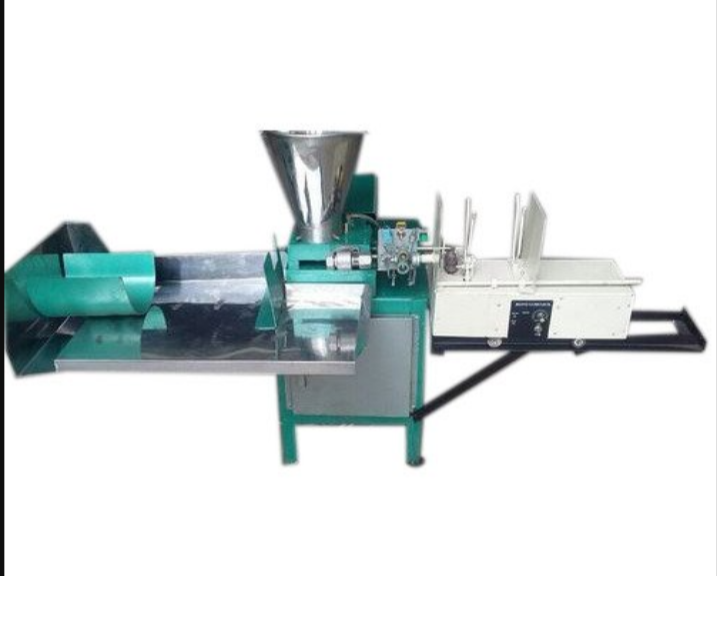
Agarbatti, known globally as incense sticks, holds a significant place in spiritual, cultural, and aromatic applications across Asia, the Middle East, Europe, and the Americas. India alone contributes more than 70% of the global incense stick supply, making agarbatti manufacturing a thriving small-scale and large-scale industry. As demand increases for premium, eco-friendly, and aromatic incense, the role of Agarbatti Making Machinery has become essential. Modern machines enhance productivity, reduce labor dependency, improve uniformity, and enable manufacturers to produce various types of incense sticks with precision.
This guide provides an in-depth explanation of agarbatti machines, types, raw materials, technology, cost, installation, maintenance, business potential, safety guidelines, troubleshooting, and more.
1. Introduction to Agarbatti Making Machinery
Agarbatti making machinery is designed to automate the production of incense sticks by efficiently combining bamboo sticks with incense paste. Traditionally, agarbatti manufacturing was done manually, which required skilled labor and produced lower output. With the rise of mechanization, semi-automatic and fully automatic machines now allow manufacturers to produce hundreds of kilograms of incense sticks daily.
Why Machines Are Essential Today
High Production Demand: Growing domestic and export demand requires consistency and volume.
Uniform Quality: Machines ensure smooth rolling, equal diameter, and proper coating thickness.
Reduced Labor Dependency: Manual labor is inconsistent and costly.
Cost-Effective Production: Machines reduce wastage and improve efficiency.
Ability to Produce Variety: Multiple types of agarbatti such as black, white, flora, herbal, dhoop, and masala sticks.
2. Types of Agarbatti Making Machinery
There are multiple machines available depending on the scale of production, required speed, and type of agarbatti. Here are the most widely used types:
### 2.1 Manual Agarbatti Rolling Machines
These machines assist workers in rolling agarbatti by hand. They do not automate the process but offer support for proper rolling.
Features:
Low cost
Suitable for small-scale units
Requires skilled labor
Output: 5–10 kg/day per worker
Advantages:
Ideal for rural or cottage industries
Great for specialty masala and handmade incense
Disadvantages:
Low productivity
Inconsistent quality
2.2 Semi-Automatic Agarbatti Making Machines
Semi-automatic machines are the most popular choice among small and medium manufacturers.
How They Work:
The machine feeds bamboo sticks automatically.
Incense paste is applied with mechanical pressure.
Operators manage raw material and collect finished sticks.
Production Capacity:
10–50 kg/hr depending on machine speed
Features:
Requires moderate electricity
Less labor required
Multi-speed settings
Advantages:
Affordable compared to fully automatic machines
Good for commercial start-ups
Easy to operate
Disadvantages:
Requires manual feeding of paste
Slightly lower consistency than fully automatic models
2.3 Fully Automatic Agarbatti Making Machines
These machines eliminate most manual work.
Capabilities:
Automatic stick feeding
Automatic paste feeding
Automatic cutting and shaping
High-speed production
Production Capacity:
80–150 kg/hr depending on motor and model
Advantages:
High precision
Less labor cost
Best for large-scale industries
Disadvantages:
Higher initial investment
Requires trained operators
2.4 High-Speed Pneumatic Agarbatti Machines
A technologically advanced version of automatic machines that uses air pressure (pneumatic systems) for rapid production.
Features:
Ultra-high speed (up to 300–400 sticks/min)
Very smooth coating
Low wastage
Best Suited For:
Mass production
Export-oriented units
2.5 Dry Mixer & Wet Mixer Machines
Mixing machines are used to blend the raw materials required for incense paste.
Dry Mixer (Powder Mixer):
Used for mixing raw powders like wood powder, jigat powder, etc.
Wet Mixer (Paddle Mixer):
Mixes wet paste with water and aromatic ingredients.
Advantages:
Ensures consistent texture
Saves mixing time
Increases uniform quality
2.6 Bamboo Stick Making Machines
These machines convert raw bamboo into thin sticks required for incense.
Types:
Bamboo slicer
Stick making machine
Polishing machine
Stick sizing machine
Used By:
Large manufacturers who produce their own bamboo sticks.
2.7 Dhoop Stick & Cone Making Machines
For manufacturers who want to diversify:
Capabilities:
Produces hollow/solid dhoop sticks
Makes incense cones in various shapes
Fully automatic and semi-automatic variants available
3. Detailed Working Procedure of an Agarbatti Making Machine
Understanding how the machine works helps operators achieve the best results.
Step 1: Preparing the Raw Material
The powder mixture includes:
Charcoal powder
Wood powder (jigat)
Aromatic chemicals
Essential oils
Adhesive agents
Water
The wet mixer ensures the right consistency.
Step 2: Feeding the Paste
In automatic machines:
Paste is loaded into a hopper.
The machine maintains consistent pressure.
Step 3: Feeding Bamboo Sticks
Depending on machine type:
Manual feeding in semi-automatic models.
Automatic feeding in fully automatic machines.
Step 4: Rolling & Coating
The machine coats the bamboo stick evenly with incense paste. Proper coating ensures:
Slow and steady burning
Even fragrance release
Higher export quality
Step 5: Cutting & Shaping
Machines have integrated cutting systems that:
Maintain uniform length
Ensure optimal weight per stick
Step 6: Drying
Wet agarbatti must be dried 24–48 hours depending on climate. Some factories use:
Solar dryers
Hot air dryers
Semi-automatic dryers
4. Major Components of an Agarbatti Machine
Motor – powers the machine
Gear system – ensures smooth rolling
Feeder system – feeds sticks automatically
Extruder – pushes paste onto sticks
Roller – applies even coating
Control panel – manages speed and settings
Safety guards – protect operators
Structure frame – holds the machine
Nozzles – for paste extrusion
Belt system – regulates movement
5. Types of Agarbatti Produced Using Machines
Black Agarbatti – coal-based, commonly exported
White Agarbatti – premium, clean-burning
Flora Agarbatti – rich perfume oils
Masala Agarbatti – traditional handmade type
Herbal Agarbatti – eco-friendly ingredients
Dhoop Sticks – thicker incense
Aromatic Cones – high fragrance output