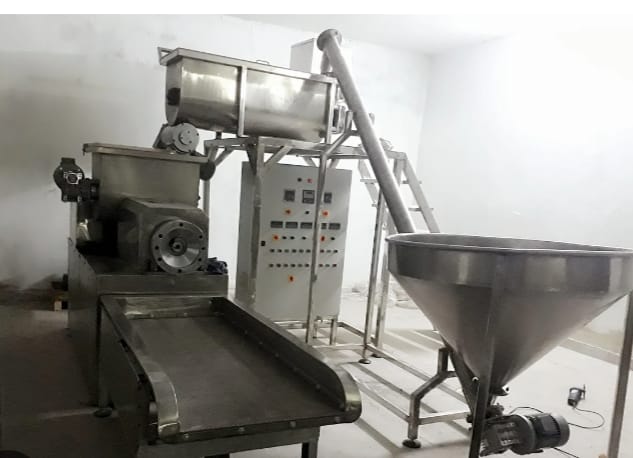


The evolution of pasta from a handmade delicacy to a globally mass-produced staple is a marvel of industrial engineering. At the heart of this transformation is the Macaroni Pasta Making Machine, a sophisticated piece of equipment that blends food science with mechanical precision.
Whether you are looking into small-scale artisanal production or high-capacity industrial lines, understanding how these machines work is essential.
1. The Core Components of a Pasta Machine
A modern macaroni production line isn't just one tool; it’s a synchronized system designed to handle heavy dough and high pressures.
The Mixing System: This is where it begins. Semolina flour (usually from Durum wheat) is mixed with water (and sometimes eggs or spinach for color). High-end machines use vacuum mixing technology to remove air bubbles, ensuring the pasta is dense and won't crack during drying.
The Extruder: This is the "engine room." A large screw or auger pushes the dough through a cylinder.
The Die (Molds): The dough is forced through shaped holes. For macaroni, these are circular with a pin in the middle to create the hollow tube.
The Cutter: A rotating blade sits at the face of the die. By adjusting the speed of this blade, the machine determines the length of the macaroni.
Pre-Drying/Vibrating Screen: Once cut, the "wet" pasta is sticky. A vibrating screen shakes the pasta to prevent clumping while a blast of air starts the skin-drying process.
2. The Production Process: Step-by-Step
To produce high-quality macaroni, the machine must follow a strict thermodynamic and mechanical path:
A. Dosing and Mixing
The machine automatically calculates the ratio of flour to liquid. Precision here is vital; if the dough is too wet, it clogs the die; too dry, and it puts excessive strain on the motor.
B. Compression and Extrusion
As the dough moves through the extruder, it undergoes mechanical heating. Because high heat can damage the gluten structure and ruin the "al dente" quality, industrial machines feature water-cooling jackets around the extrusion barrel to keep temperatures stable, usually below $50°C$.
C. Shaping
The shape of the macaroni depends entirely on the Teflon or Bronze die.
Teflon Dies: Produce smooth, shiny pasta that slides easily through the machine.
Bronze Dies: Create a rougher, porous surface. This is preferred by premium brands because the rough texture helps pasta sauce "stick" to the macaroni.
D. The Drying Phase (Crucial Step)
This is often the longest part of the process. If macaroni dries too fast, it develops internal stress and shatters. If it dries too slowly, it can mold. Industrial machines use multi-stage drying chambers that control humidity and temperature with surgical precision.
3. Types of Macaroni Machines
Depending on your output goals, machines generally fall into three categories:
| Machine Type | Typical Output | Best For |
| Manual/Electric Countertop | 1–5 kg/hr | Small restaurants, home use |
| Semi-Industrial | 30–100 kg/hr | Specialty pasta shops, catering |
| Fully Automated Line | 200–2,000+ kg/hr | Large-scale commercial distribution |
4. Key Technical Specifications to Consider
When evaluating a machine, don't just look at the price. Look at the "vitals":
Motor Power: Usually measured in Kilowatts (kW). High-torque motors are necessary to push stiff durum dough.
Vacuum Pump: Essential for a "clear" look and better shelf life.
Variable Speed Drive (VFD): Allows you to adjust the extrusion and cutting speed independently.
Material: Stainless steel (SUS304) is the industry standard for food safety and easy cleaning.
5. Maintenance and Hygiene
Because pasta dough is organic and moist, these machines can become breeding grounds for bacteria if not maintained.
Die Cleaning: Most machines come with a "die wash" station.
Screw Removal: The extrusion screw must be easily removable to clear out old dough that can harden like cement if left overnight.
6. The Future: Automation and AI
Modern 2026-era machines are increasingly incorporating sensors to monitor the moisture content of the flour in real-time, automatically adjusting the water flow to compensate. This reduces waste and ensures every batch of macaroni tastes exactly like the last.
Pro Tip: If you are starting a pasta business, the "Drying Room" is just as important as the "Making Machine." Invest in a high-quality dehumidification system to ensure your macaroni has a long, stable shelf life.