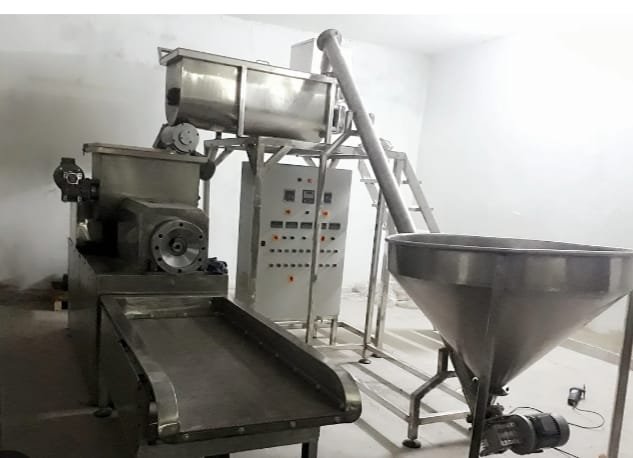


This guide provides a comprehensive overview of the Pasta and Macaroni Making Machine industry, covering the technology, production processes, and business considerations for setting up a manufacturing line.
1. Introduction to Industrial Pasta Production
Pasta and macaroni are global staples, valued for their long shelf life, ease of preparation, and nutritional versatility.1 As urbanization increases and lifestyles become faster, the demand for high-quality, extruded pasta products has surged.
Modern Pasta Macaroni Making Machines are sophisticated systems that integrate mixing, kneading, and extrusion into a single automated flow.2 These machines can produce a vast array of shapes—from classic elbows and fusilli to penne, shells, and spaghetti—simply by changing the extrusion dies.3
2. The Core Components of the Machine
An industrial pasta line is rarely a single machine; it is a synchronized system of several components:4
Vacuum Mixer: High-quality pasta requires mixing flour (usually Semolina) and water under a vacuum. This prevents the oxidation of pigments, ensuring the pasta retains a bright yellow color and avoiding air bubbles that cause breakage during boiling.
Extruder: This is the heart of the machine. A high-pressure screw pushes the dough through a die. Modern extruders use PLC (Programmable Logic Control) to manage speed and pressure.5
The Die (Molds): These are Teflon-coated or bronze attachments that determine the shape of the pasta.6 Teflon results in smooth pasta, while bronze creates a rougher texture that holds sauce better.7
Cutting System: A rotating blade at the face of the die cuts the pasta to the desired length.
Pre-Dryer (Shaker): This vibrates and applies initial heat to the surface of the pasta to prevent the pieces from sticking together before they enter the main dryer.8
Continuous Dryer: This is the most critical stage. Controlled humidity and temperature (usually between 70°C to 90°C) slowly remove moisture to prevent cracking.
3. The Technical Process Flow
To produce high-standard macaroni, the machine follows a precise five-step sequence:
Step 1: Raw Material Dosing
The process begins with the automatic weighing of Durum Wheat Semolina and water. Some lines also incorporate egg liquid or vegetable purees (spinach/tomato) for colored pasta.
Step 2: Extrusion and Shaping
The dough is kneaded into a homogenous mass. As it passes through the extruder, the friction generates heat; therefore, the extruder barrel is usually water-cooled to keep the dough below 50°C, preserving the protein structure.
Step 3: The Shaking/Pre-Drying Phase
Freshly extruded pasta has a moisture content of about 30%. The "shaker" uses hot air to form a "skin" on the pasta, ensuring it maintains its shape.
Step 4: Final Drying and Cooling
The pasta travels through a multi-layer drying conveyor.9 The moisture is reduced to roughly 12.5%, which is the industry standard for shelf-stable dry pasta. Finally, it is cooled to room temperature to prevent condensation inside the packaging.
4. Key Features of Modern Macaroni Machines
When selecting a machine, manufacturers look for these specific technological advantages:
| Feature | Benefit |
| Stainless Steel (SUS304) | Ensures food safety, prevents rust, and is easy to sanitize. |
| Frequency Control | Allows the operator to adjust the speed of the feeder, cutter, and extruder independently. |
| Vacuum Technology | Eliminates air bubbles, resulting in a denser, more "al dente" product. |
| Modular Dies | Enables a single machine to produce 20+ different pasta shapes. |
5. Business Considerations: Choosing the Right Scale
Pasta machines are generally categorized by their production capacity:
Small Scale (10 - 50 kg/hr): Ideal for restaurants, hotels, or boutique "artisanal" pasta shops.
Medium Scale (100 - 300 kg/hr): Perfect for small-to-medium enterprises (SMEs) supplying local supermarkets.
Large Industrial Scale (500 - 2,000+ kg/hr): Fully automated lines for national or international distribution brands.
Maintenance and Longevity
To ensure the machine lasts 10–15 years, daily cleaning of the extrusion screw and dies is mandatory. Flour buildup can harden and damage the motor if not addressed. Most modern machines feature "Easy-Clean" designs where the screw can be ejected automatically.
6. Market Trends and Innovations
The industry is currently shifting toward Multi-Grain and Gluten-Free production. Machines are being recalibrated to handle non-traditional flours like rice, corn, lentil, and chickpea flour. Since these flours lack gluten, the extrusion pressure and steaming requirements differ from traditional wheat pasta.
Furthermore, Energy Efficiency has become a priority. New dryers use heat-recovery systems that recycle the hot air, reducing electricity or gas consumption by up to 20%.
7. Summary of Advantages
Investing in an automated pasta making machine offers:
Consistency: Every batch has the same texture, color, and cooking time.
Labor Efficiency: A fully automated line requires only 2–3 operators.
High Profit Margin: The value-add from raw flour to packaged pasta is significant.
Pro Tip: When buying a machine, always request a "Die Set" that includes the most popular shapes in your target market (e.g., Macaroni Elbows for North America, Penne for Europe, or Fusilli for Middle Eastern markets).