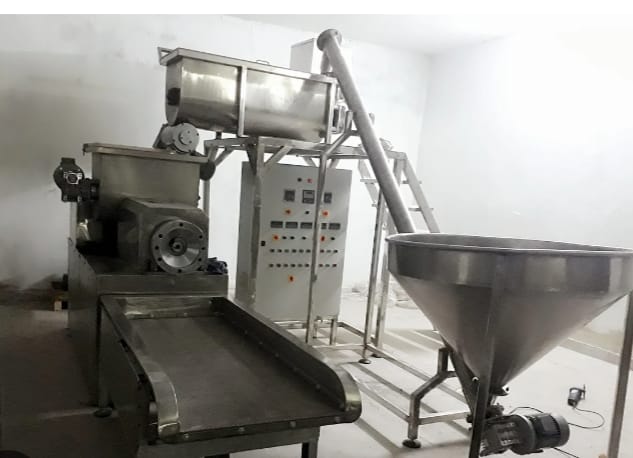


The production of macaroni and pasta on a commercial scale is a fascinating blend of traditional culinary art and modern engineering. A Pasta Macaroni Making Machine (or production line) is a sophisticated set of equipment designed to transform simple raw materials—mainly durum wheat semolina and water—into various shapes of pasta through a process of mixing, extrusion, and drying.1
Here is a comprehensive breakdown of how these machines work, their components, and the industry standards governing them.
1. The Core Technology: Single vs. Twin-Screw Extrusion
At the heart of any macaroni machine is the extruder.2 Most modern industrial lines use Single-Screw Extrusion technology combined with a vacuum system.
Vacuum System: This is critical. By removing air bubbles from the dough during the mixing phase, the machine ensures the final pasta is dense, has a vibrant yellow color, and doesn't crack during the drying process.
The Screw: The screw pushes the dough forward through a barrel. The friction and pressure develop the gluten network, giving the pasta its "al dente" structural integrity.
2. The Production Process Flow
A complete macaroni production line is usually automated to ensure consistency and hygiene.3 The process follows these five main stages:
A. Raw Material Mixing (The Dosing System)
The process begins with the precise measurement of flour (usually semolina) and water.4 High-end machines include automatic dosing pumps that maintain a moisture level of roughly 25% to 30%.
B. Extrusion and Shaping
The dough is forced through a die (a mold).5 The shape of the die determines whether the machine produces macaroni, fusilli, penne, or shells.6
Teflon Dies: Produce a smooth, shiny surface on the pasta.7
Bronze Dies: Create a rougher, porous surface, which is preferred for high-end pasta as it helps sauces "stick" to the noodle.8
C. Pre-Drying (The Shaker)
Immediately after being cut by a high-speed rotating blade, the pasta is damp and sticky. It passes through a vibrating pre-dryer (shaker) that uses hot air to dry the surface quickly, preventing the pieces from sticking together.9
D. Final Drying (The Critical Stage)
This is the most time-consuming part. The pasta enters a multi-layer drying oven.
Temperature Control: If dried too fast, the pasta will crack (checking).10 If dried too slow, it could spoil or lose its shape.
Moisture Reduction: The goal is to reduce moisture from ~30% down to a shelf-stable 12.5%.
E. Cooling and Packaging
Before the pasta can be bagged, it must be cooled to room temperature in a cooling conveyor to prevent condensation inside the plastic packaging.
3. Key Components of the Machine
If you are looking to invest in a macaroni machine, these are the technical components you must evaluate:
| Component | Function | Material Requirement |
| Feeding Hopper | Holds the raw flour. | Food-grade Stainless Steel (SUS304) |
| Extrusion Barrel | Maintains pressure and temperature. | Water-cooled jacketed steel |
| Rotary Cutter | Cuts the pasta to specific lengths. | Frequency-controlled blades |
| Drying Oven | Removes moisture via heat. | Multi-layer conveyor belt |
| Control Panel | Manages speed, heat, and moisture. | PLC Touch Screen (Delta/Siemens) |
4. Technical Specifications (Sample Data)
For a medium-scale industrial machine, the specifications typically look like this:
Production Capacity: 100kg/h to 500kg/h.
Total Power: $50kW$ to $120kW$ (depending on the heating method).
Required Space: A full line usually requires a length of 15 to 22 meters.
Labor: 1–2 operators are needed to monitor the PLC system.
5. Maintenance and Hygiene
Because pasta is a food product, the machine must meet strict HACCP (Hazard Analysis and Critical Control Points) standards.
Cleaning: The extrusion screw and dies must be cleaned after every shift to prevent dough from hardening and harboring bacteria.
Lubrication: Use only food-grade lubricants for the mechanical gears.
Material: Ensure all parts contacting the food are Stainless Steel 304, which resists corrosion from the moisture in the dough.
6. Why Invest in a Macaroni Machine?
The global pasta market continues to grow because it is a low-cost, high-shelf-life staple food.
Versatility: By simply changing the die (which takes about 15 minutes), one machine can produce over 20 different shapes of pasta.
Automation: Modern machines reduce human error, leading to a uniform product that looks professional on supermarket shelves.11
High ROI: The raw materials (flour and water) are inexpensive compared to the retail price of packaged pasta.
Conclusion
A Pasta Macaroni Making Machine is a significant investment that combines mechanical pressure, thermal dynamics, and culinary science. Whether you are looking at a small artisanal extruder or a massive 1000kg/h industrial line, the key to quality lies in the vacuum extrusion and the precision of the drying cycle.