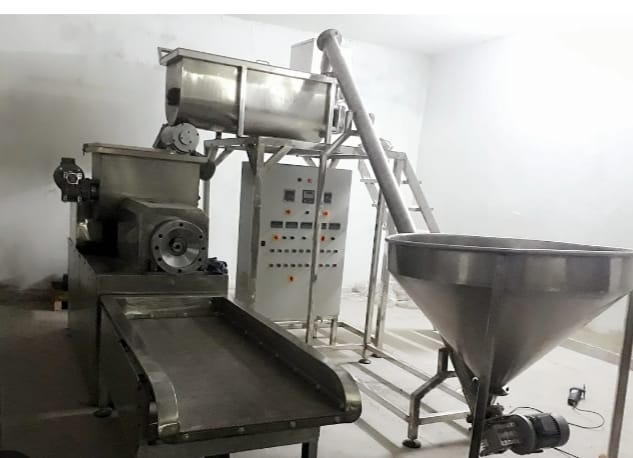


Making pasta—specifically macaroni—is a beautiful blend of culinary art and food science. While we often think of it as a simple pantry staple, the process of transforming humble flour and water into the iconic hollow elbows is a fascinating journey.
Below is a comprehensive guide to macaroni making, covering its history, the industrial process, and how to craft it by hand.
1. The Heritage of Macaroni
The term "macaroni" historically referred to all types of pasta, but today it specifically denotes dry, tube-shaped pasta. Derived from the Italian word maccheroni, its origins are debated—some point to ancient Greek "makaria" (barley broth), while others credit the refinement of the process to the culinary masters of Naples.
What makes macaroni unique is its durability. Unlike fresh egg pasta, traditional macaroni is made from durum wheat and water, designed to be dried and stored for months, making it a global staple of food security and comfort.
2. The Golden Ingredient: Durum Wheat
The secret to great macaroni isn't a complex spice blend; it’s the quality of the wheat.
Semolina: This is the coarse-ground heart (endosperm) of durum wheat.
Protein Content: Durum is the hardest of all wheats. It has a high protein content and high gluten strength, which allows the pasta to maintain its shape during the high-pressure extrusion process and while boiling in water.
The Color: The natural carotenoid pigments in durum give macaroni its signature golden hue without the need for artificial dyes.
3. The Industrial Manufacturing Process
In a modern factory, macaroni is produced through a highly controlled, five-step process.
Step 1: Mixing and Kneading
Semolina is mixed with warm water in large vacuum mixers. The vacuum is crucial because it prevents air bubbles from forming in the dough. If air is trapped, the pasta becomes brittle and develops a white, opaque appearance rather than a translucent gold.
Step 2: Extrusion (The Shaping)
This is where the "macaroni" shape is born. The dough is pushed through a die—a metal plate with specific cutouts.
To create the hollow center, the die has a pin in the middle of the circular hole.
As the dough flows around the pin and exits the die, it fuses back together to form a tube.
The characteristic "elbow" curve is achieved by cutting the pasta at an angle or using a die that allows one side of the tube to emerge slightly faster than the other.
Step 3: The Pre-Dryer
Freshly extruded pasta is very sticky (about 30% moisture). It passes through a "shaking" pre-dryer that hardens the exterior surface quickly, preventing the pieces from clumping together.
Step 4: Final Drying
This is the most critical stage. If the pasta dries too fast, it will crack (checkering). If it dries too slowly, it can mold or spoil. Modern ovens use a "High-Temperature" (HT) drying cycle that takes between 6 to 10 hours, reducing moisture to a stable 12.5%.
Step 5: Packaging
Once cooled, the macaroni is weighed and sealed in bags or boxes, ready for a shelf life of up to two years.
4. How to Make Artisanal Macaroni at Home
You don't need a factory to make macaroni. You can create a superior, "bronze-cut" style version in your own kitchen.
The Recipe
400g Semolina flour (Rimacinata)
190ml Warm water
Pinch of salt
The Method
The Well: Mound your flour on a wooden board. Create a deep well in the center and pour in the water.
The Incorporation: Use a fork to slowly whisk the flour from the inner walls into the water until a thick paste forms.
The Knead: Once it becomes a shaggy dough, use your hands. Knead for a full 10 minutes. The dough will be much stiffer than bread dough.
The Rest: Wrap the dough in plastic and let it rest for 30 minutes. This allows the gluten to relax and the flour to fully hydrate.
Shaping Without a Machine
Since home cooks often don't have extruders, you can make Maccheroni al Ferretto:
Roll the dough into thin ropes (about the thickness of a pencil).
Cut the ropes into 2-inch segments.
Place a thin metal skewer or a knitting needle length-wise on a segment.
Roll the dough around the wire with your palm.
Slide the hollow tube off the wire.
5. Why "Bronze Dies" Matter
When buying or making macaroni, you may see the term "Bronze Die Extruded." * Teflon Dies: Most mass-market pasta uses Teflon-lined dies. This makes the pasta smooth and shiny, but sauce slides right off it.
Bronze Dies: Traditional makers use bronze inserts. These create a rough, porous texture on the surface of the macaroni. This texture is essential because it acts like "velcro" for your sauce, ensuring every bite is flavorful.
6. The Science of Cooking Macaroni
To honor the making process, the cooking must be precise.
The 1-10-100 Rule: > For every 100g of pasta, use 1 Liter of water and 10g of salt.
The Boil: Use a large pot to prevent the starch from making the water too "gloopy," which causes sticking.
The Salt: Salt doesn't just season the pasta; it affects the starch gelatinization, giving the macaroni a better "bite."
Al Dente: Literally "to the tooth." The macaroni should be removed from the water when there is still a tiny white core of uncooked starch in the center of the tube. It will finish cooking in the sauce.
7. Storage and Quality Control
High-quality macaroni should have:
A Consistent Color: No dark specks (hulls) or white spots (unmixed flour).
A Clean Snap: When broken dry, it should snap cleanly like glass, not crumble.
Low Sediment: After boiling, the water should be cloudy but not thick with fallen-off starch.