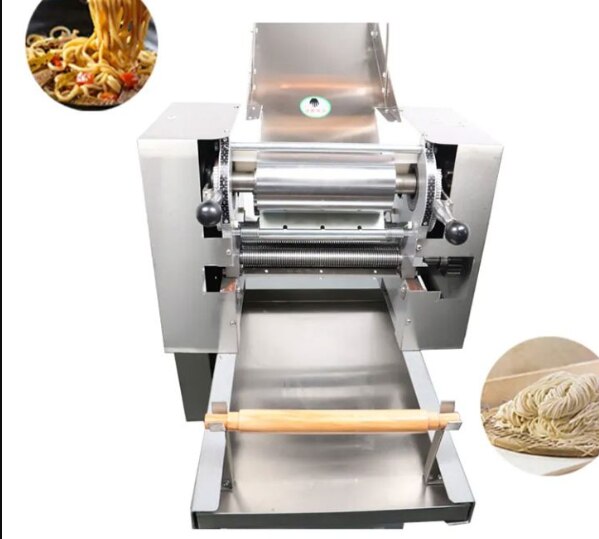


Noodles Making Machinery: A Comprehensive Guide
1. Introduction
Noodles are one of the most widely consumed food products in the world, enjoyed across cultures in various forms such as instant noodles, fresh noodles, rice noodles, wheat noodles, and specialty varieties. With the growing demand for convenient, affordable, and ready-to-cook food products, the noodles industry has witnessed rapid industrialization. At the heart of this industry lies noodles making machinery, which enables large-scale, consistent, hygienic, and cost-effective production.
Noodles making machinery refers to a set of mechanical and automated equipment designed to process raw materials—primarily flour and water—into finished noodle products. These machines range from small-scale, semi-automatic units for local businesses to fully automated industrial production lines capable of producing several tons of noodles per day.
This article provides a detailed overview of noodles making machinery, including its types, components, working principles, production processes, advantages, applications, maintenance, and future trends.
2. Overview of Noodles Making Machinery
Noodles making machinery is engineered to replicate traditional noodle-making techniques while significantly improving efficiency, uniformity, and hygiene. Modern machines integrate mechanical, electrical, and sometimes computerized systems to ensure precise control over mixing, sheeting, cutting, steaming, frying, drying, and packaging.
Key Objectives of Noodles Making Machinery
Increase production capacity
Ensure consistent product quality
Reduce labor dependency
Maintain food safety standards
Minimize raw material wastage
Lower overall production costs
Depending on the type of noodles being produced, machinery can be customized for different thicknesses, shapes, textures, and cooking characteristics.
3. Types of Noodles Making Machinery
Noodles making machinery can be categorized based on scale of operation, type of noodles, and level of automation.
3.1 Based on Scale of Production
Small-Scale Machines
Suitable for restaurants, small factories, and startups
Semi-automatic or manual operation
Lower investment cost
Production capacity: 50–300 kg per hour
Medium-Scale Machines
Used by regional manufacturers
Partially automated systems
Moderate investment and output
Production capacity: 300–1,000 kg per hour
Large-Scale Industrial Machines
Fully automated production lines
Used by multinational brands
High initial investment
Production capacity: 1–10 tons per hour or more
3.2 Based on Type of Noodles
Instant Noodles Making Machinery
Includes steaming, frying or hot-air drying
Produces ready-to-cook noodle cakes
Highly automated
Fresh Noodles Making Machinery
Produces soft, non-fried noodles
Short shelf life
Often used by local markets and restaurants
Rice Noodles Making Machinery
Uses rice flour or rice slurry
Includes soaking, grinding, steaming, and cutting
Udon and Ramen Noodles Machinery
Specialized for thicker, chewy noodles
Precise dough control required
3.3 Based on Automation Level
Manual Machines
Semi-Automatic Machines
Fully Automatic PLC-Controlled Machines
4. Main Components of Noodles Making Machinery
A complete noodles making production line consists of several interconnected machines, each performing a specific function.
4.1 Flour Mixing Machine
The mixing unit combines wheat flour (or rice flour) with water, salt, and additives to form dough. Uniform mixing is essential for noodle texture and elasticity.
Features:
Stainless steel construction
Adjustable mixing speed
Hygienic design
4.2 Dough Kneading and Resting System
After mixing, the dough is kneaded and allowed to rest. This process develops gluten and improves dough flexibility.
Benefits:
Better noodle strength
Improved cooking quality
Uniform thickness
4.3 Dough Sheeting Machine
The dough is passed through rollers to form thin sheets. The thickness can be adjusted based on the type of noodles being produced.
Key Characteristics:
Multiple roller stages
Smooth surface finish
Adjustable gap control
4.4 Slitting and Cutting Machine
The dough sheets are cut into noodle strands of desired width and shape.
Types of Cuts:
Round
Flat
Square
Wavy (for instant noodles)
4.5 Steaming Unit
Steaming partially cooks the noodles and sets their structure.
Functions:
Gelatinizes starch
Enhances texture
Prepares noodles for drying or frying
4.6 Frying or Drying Machine
Frying System
Uses edible oil
Produces instant noodles
Fast dehydration process
Hot-Air Drying System
Oil-free process
Healthier alternative
Longer drying time
4.7 Cooling Conveyor
Cools noodles after frying or drying to prevent moisture condensation and ensure stability before packaging.
4.8 Packaging Machine
Automated packaging systems weigh, wrap, seal, and label noodle products.
Packaging Options:
Pillow packs
Cups
Bowls
Bulk packaging